Leaves on Lawn Winter: Can They Damage Grass?
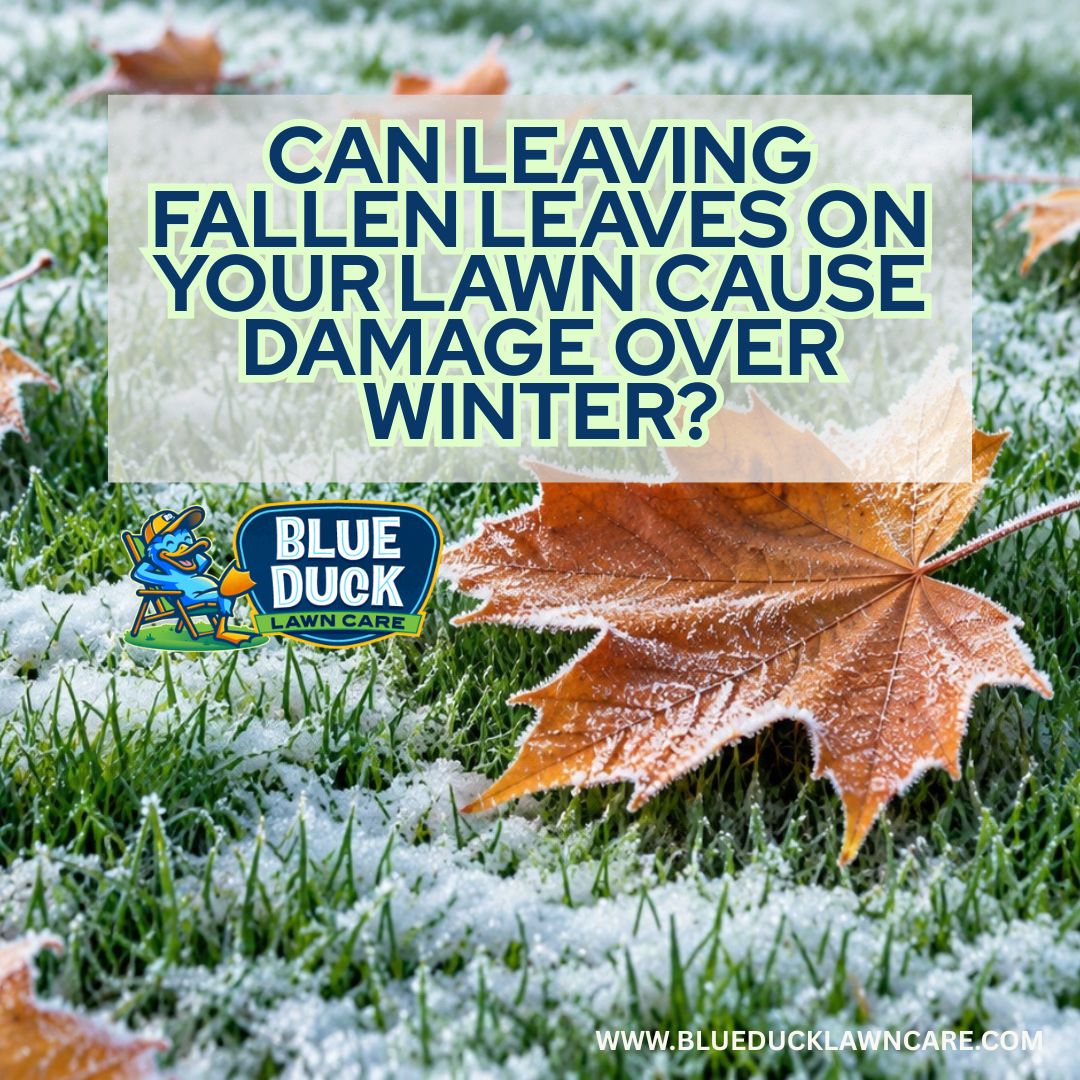
Leaves on lawn winter damage can become a serious problem when thick layers of fallen leaves cover your grass for extended periods. While a few scattered leaves are harmless, heavy leaf buildup can block sunlight, trap moisture, and weaken your lawn before spring arrives.
At Blue Duck Lawn Care, we know Indianapolis homeowners have plenty to manage during November. With the holidays approaching and temperatures dropping, clearing leaves may not seem urgent. However, leaving a thick blanket of leaves on your grass all winter can create problems that become noticeable when the snow melts.
Here’s what you should know before deciding whether to rake, mulch, or leave those autumn leaves alone.
How Leaves on Your Lawn Cause Winter Damage
Fallen leaves are a natural part of autumn, but excessive buildup can interfere with healthy grass.
Most Indianapolis lawns contain cool-season grasses such as Kentucky bluegrass, tall fescue, and perennial ryegrass. These grasses may continue growing during mild fall weather.
When thick layers of leaves cover the lawn, they reduce the sunlight reaching the grass.
Wet leaves can also become matted, creating a dense covering that limits airflow and holds moisture against the turf.
Can Wet Leaves Kill Grass During Winter?
Yes, heavy layers of wet leaves can weaken or smother grass.
When leaves remain packed against the lawn for weeks, the grass underneath may become stressed.
Matted leaves can also create conditions favorable for certain fungal diseases.
However, a few scattered leaves are unlikely to cause significant damage.
The biggest concern is prolonged coverage that prevents the grass from receiving adequate light and air.
Why November Leaf Removal Matters in Indianapolis
November often brings cooler temperatures, rainfall, and significant leaf accumulation throughout Central Indiana.
In neighborhoods with mature trees, leaves can quickly cover entire lawns.
Rain makes those leaves heavier and more difficult to remove.
As temperatures drop, slower evaporation means wet leaf piles may remain damp for longer periods.
Removing excessive buildup before winter helps reduce unnecessary stress on your grass.
Should You Rake or Mulch Fallen Leaves?
Both methods can work, depending on the amount of leaves covering your lawn.
Mulching Leaves for Better Fall Lawn Care
Mulching is a practical option when leaves are dry and relatively manageable.
A mulching mower chops leaves into smaller pieces that can settle between grass blades and gradually decompose.
This returns organic matter to the soil.
However, mulching only works when the shredded leaves do not form a thick layer over the grass.
If the lawn remains covered after mowing, remove the excess material.
When Leaf Removal Is the Better Choice
Raking or collecting leaves is often necessary when:
Thick piles completely cover the grass.
Leaves are wet, heavy, or matted together.
Shaded areas remain covered for extended periods.
Newly established grass is being smothered.
Your mower cannot break down the leaves adequately.
Avoid running heavy equipment across saturated soil, as this can cause compaction and ruts.
Can Fallen Leaves Cause Lawn Disease?
Heavy leaf buildup can contribute to conditions that favor certain turf diseases.
When wet leaves remain pressed against grass, they restrict airflow and keep the surface damp.
This can increase stress on already weakened turf.
Snow mold is another concern during winter, particularly when prolonged snow cover and other favorable conditions allow the disease to develop.
Although fallen leaves do not automatically cause snow mold, removing thick debris helps reduce matting and unnecessary moisture retention.
How to Protect Your Indianapolis Lawn Before Winter
You do not need to remove every single leaf from your yard.
Instead, focus on preventing excessive coverage.
Simple Winter Lawn Protection Tips
Check your lawn regularly. Remove heavy leaf buildup before it becomes wet and compacted.
Mulch manageable amounts. Shred dry leaves into small pieces that settle between grass blades.
Clear shaded areas. These sections often remain damp longer than sunny areas.
Protect newly established grass. Avoid aggressive raking that could disturb young seedlings.
Stay off saturated soil. Wait for firmer conditions before using heavy lawn equipment.
These simple steps can help protect your grass without adding unnecessary work to your schedule.
What If You Leave Leaves on Your Lawn All Winter?
If your lawn remains buried beneath thick leaves throughout winter, you may notice yellowed grass, flattened patches, or thinning turf in spring.
Some affected areas may recover once sunlight and airflow return.
However, severely damaged sections may require additional lawn care.
For Indianapolis homeowners dealing with compacted soil, persistent moisture, or existing thin spots, winter leaf buildup can make recovery more challenging.
If you discover damaged grass in spring, evaluate the underlying conditions before applying fertilizer or seed.
Get Professional Fall Lawn Care in Indianapolis
Managing leaves on lawn winter problems starts with keeping your grass free from thick, matted leaf coverage. Mulching small amounts can benefit your lawn, but excessive buildup should be removed before winter.
At Blue Duck Lawn Care, we help Indianapolis homeowners maintain healthier lawns through professional fertilization, weed control, aeration, overseeding, and seasonal lawn care services.
Our team understands Central Indiana’s clay-heavy soil, unpredictable fall weather, and the challenges of keeping residential lawns healthy throughout the year.
Concerned about your lawn heading into winter? Contact Blue Duck Lawn Care today to discuss your lawn care needs and prepare for a healthier, greener spring.