Fall Lawn Care Indianapolis: Winter Prep
Fall lawn care Indianapolis homeowners need in late November isn’t always about fixing an unhealthy lawn. Sometimes, it’s about protecting healthy grass before winter arrives.
At Blue Duck Lawn Care, our technicians are still out caring for residential lawns as November winds down. With temperatures changing and winter approaching, knowing which treatments are still worthwhile can make a difference.
Late Fall Lawn Care Indianapolis: Why Timing Matters
November weather in Indianapolis can change quickly.
This week is a perfect example. Temperatures are reaching the upper 60s, but the forecast calls for highs in the 40s and overnight temperatures near or below freezing as Thanksgiving approaches.
That kind of temperature swing matters when planning lawn treatments.
Cool-season grasses commonly found in Indianapolis, including Kentucky bluegrass and tall fescue, can remain active during mild fall weather.
However, as soil temperatures drop and growth slows, the window for certain lawn care treatments becomes smaller.
That’s why late-fall lawn care should focus on what your grass actually needs rather than following the calendar alone.
Is Late-Fall Lawn Fertilization Still Worth It?
For many Indianapolis lawns, properly timed fall fertilization is an important part of maintaining healthy turf.
Cool-season grasses can continue developing roots during favorable fall conditions, even when their visible growth slows.
A suitable fertilizer application may help support root development and nutrient reserves.
When Should Indianapolis Homeowners Stop Fertilizing?
Not every lawn needs another treatment in November.
The decision depends on several factors:
Whether the grass is still actively growing
Soil temperature and moisture conditions
Previous fertilizer applications
The lawn’s overall health
Upcoming freezing weather
Applying fertilizer to frozen or saturated ground isn’t recommended.
If your lawn has already received its scheduled fall treatments, adding more fertilizer may offer little benefit.
A professional evaluation can help determine whether another application is appropriate.
What Our Blue Duck Lawn Care Technician’s Visit Shows
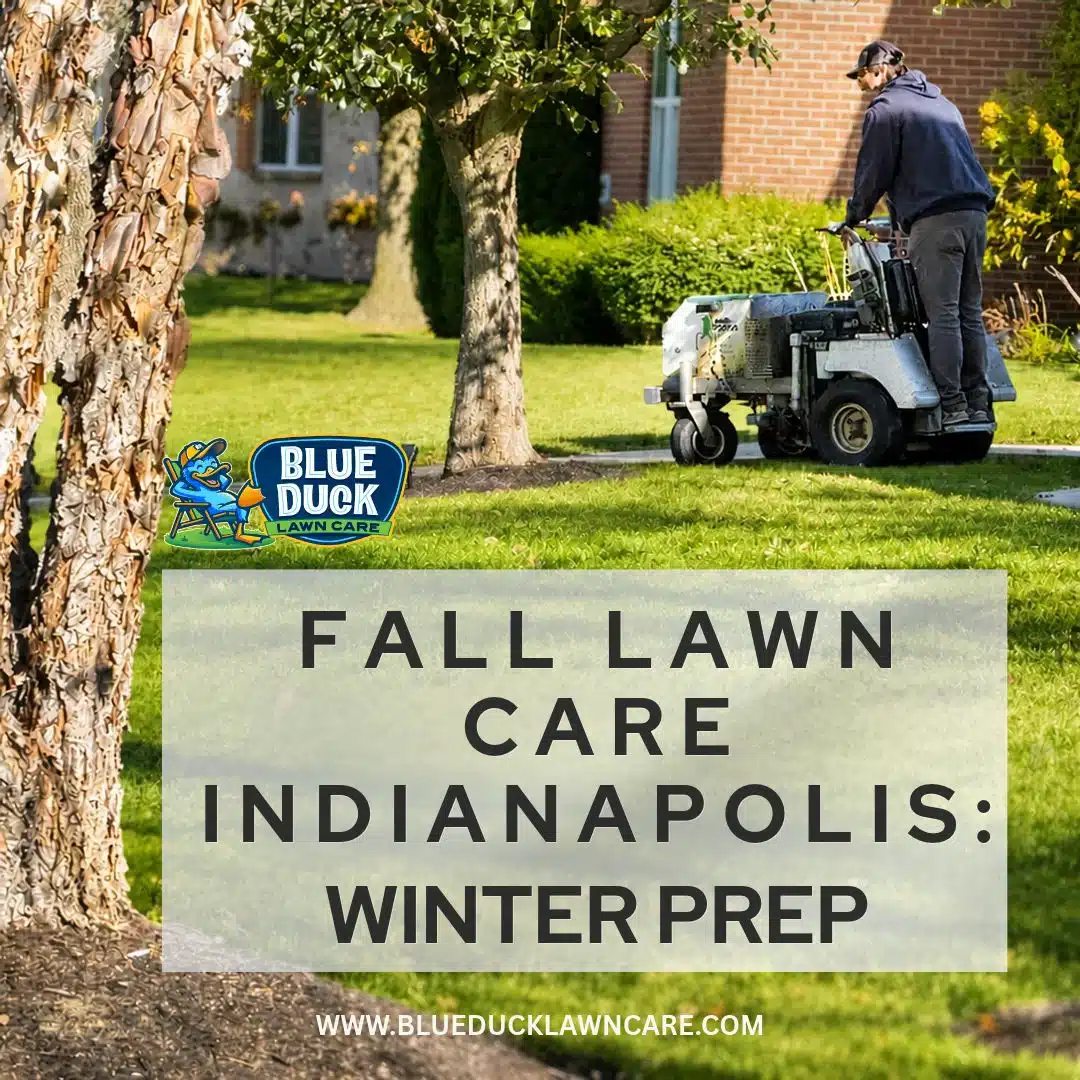
The photo captures something we see regularly during the fall: a lawn that still looks green even as winter approaches.
Our technician is operating professional lawn care equipment across a residential property surrounded by mature trees and landscaping.
While the photo doesn’t establish which treatment was being performed, it shows the kind of fieldwork that goes into maintaining residential lawns.
Good lawn care isn’t just about applying products.
It also involves checking conditions, understanding the property, and making sure treatments are appropriate for the season.
A lawn can look healthy in November and still benefit from careful planning for the months ahead.
Late Fall Lawn Care Tips Before Freezing Temperatures
With colder weather approaching, Indianapolis homeowners should focus on a few practical maintenance tasks.
1. Keep Fallen Leaves From Smothering Your Grass
A light scattering of leaves usually isn’t a problem.
However, thick, wet layers can block sunlight and hold moisture against the turf.
Mulch manageable amounts of dry leaves or remove heavy buildup before winter.
2. Avoid Heavy Equipment on Saturated Soil
Late-fall rainfall can leave lawns soft and muddy.
Heavy machinery and repeated foot traffic may create ruts or compact the soil.
If the ground is saturated, wait until conditions improve before using lawn equipment.
3. Complete Your Final Mowing When Needed
Cool-season grass may continue growing during mild November weather.
If mowing is necessary, avoid cutting the lawn excessively short.
For many established cool-season lawns, approximately 2.5 to 3 inches is a reasonable final mowing height.
Never mow frozen or waterlogged turf.
4. Check for Persistent Lawn Weeds
Perennial weeds such as Creeping Charlie and wild violets can survive Indiana winters.
Some treatments may still be effective during mild weather when weeds are actively growing.
However, herbicide applications must follow product label requirements and suitable weather conditions.
5. Plan Spring Repairs Instead of Rushing
Thin grass, compacted areas, and bare patches don’t always need immediate treatment.
Late November is generally too late for conventional overseeding in Indianapolis.
Instead, identify problem areas now and plan aeration, overseeding, or other repairs for the appropriate growing season.
Why Professional Lawn Care in Indianapolis Makes a Difference
One of the biggest mistakes homeowners make is assuming every lawn needs the same treatment at the same time.
In reality, soil conditions, grass type, weather, and previous applications all influence what should happen next.
At Blue Duck Lawn Care, we believe in providing the right care at the right time.
Our technicians work with the challenges that come with maintaining Central Indiana lawns, from clay-heavy soil to changing seasonal temperatures.
Sometimes that means recommending a treatment. Other times, it means recognizing when the lawn is better left alone until conditions improve.
Get Your Indianapolis Lawn Ready for Winter With Blue Duck Lawn Care
Late fall lawn care Indianapolis homeowners prioritize now can make a difference in how their grass handles winter and recovers in spring.
Whether your lawn needs a final seasonal treatment, help with persistent weeds, or a plan for next year’s growing season, Blue Duck Lawn Care is here to help.
We provide professional fertilization, weed control, aeration, overseeding, and seasonal lawn care services throughout Indianapolis and surrounding communities.
Want to know what your lawn needs before winter? Contact Blue Duck Lawn Care today to discuss your lawn’s condition and prepare for a healthier, greener spring.