Snow Compaction Damage to Your Lawn: How To Prevent It
Many Indiana homeowners don’t realize how quickly snow compaction damage can weaken their lawn. When snow becomes dense from foot traffic, freezing, or repeated storms, it presses tightly against the soil and limits airflow. This stress slows spring green-up, encourages disease, and makes the lawn more vulnerable when temperatures rise again.
Knowing how to prevent this damage protects your grass through every winter storm.
How to Prevent Snow Compaction Damage to Your Lawn: Key Steps for Indiana Homeowners
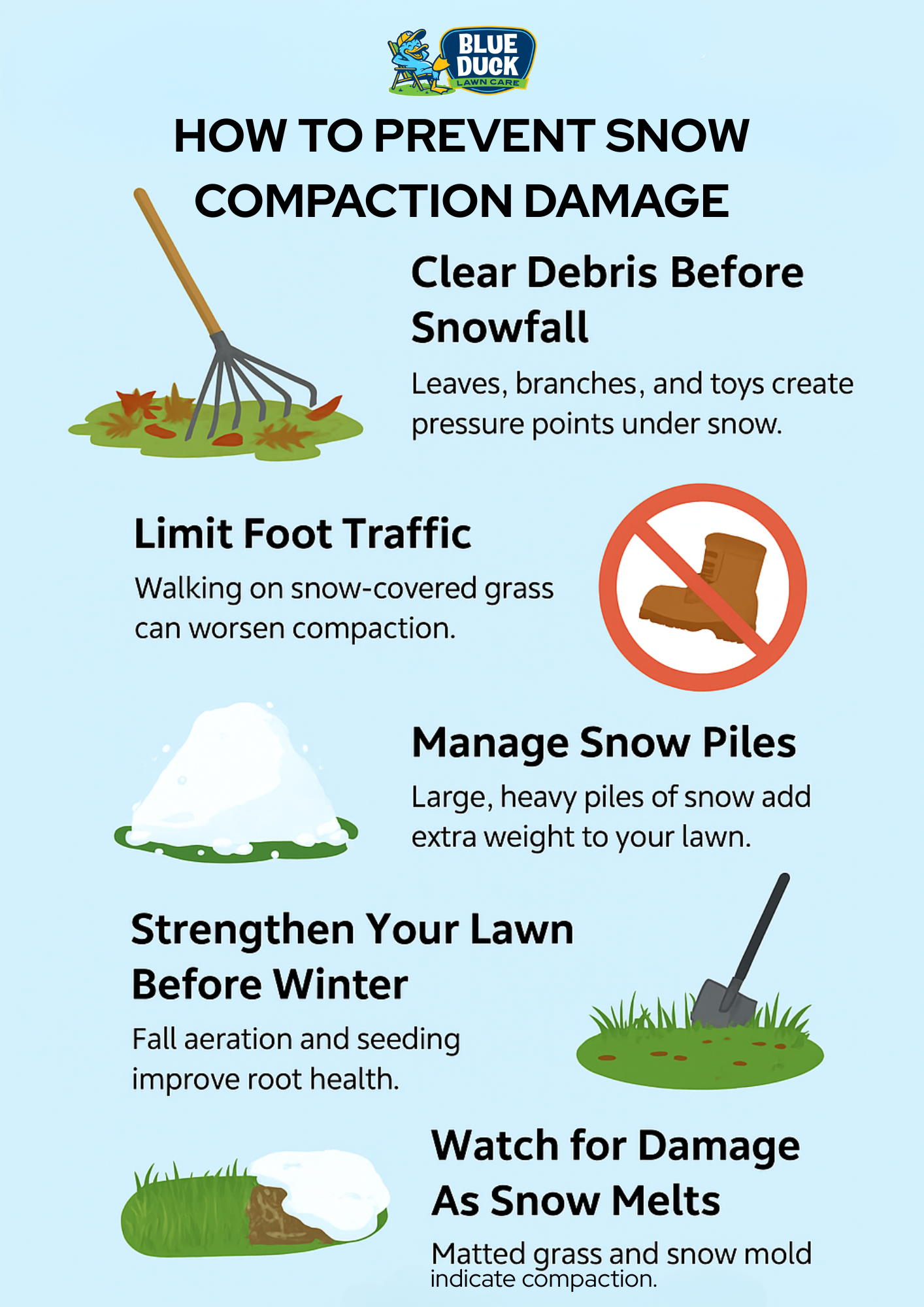
1. Clear Yard Debris Before Snowfall to Prevent Snow Compaction Damage
Leaves, branches, toys, and leftover fall debris trap moisture when buried under snow. This creates pressure points that worsen compaction.
Walk your yard before the first major storm and remove:
- Leaves and clumps of grass
- Sticks and branches
- Outdoor tools or furniture left on the lawn
A clean yard allows snow to fall evenly without adding stress to the soil.
2. Avoid Walking on the Lawn to Prevent Snow Compaction Damage
Footprints compress snow deeper into the soil. Repeated traffic forms icy tracks that suffocate grass and take months to recover.
Try to:
- Use sidewalks or designated paths
- Keep kids and pets off frozen turf
- Shovel walkways early so no one cuts across the yard
Dormant grass is fragile. Reducing foot traffic protects the crown of each grass plant.
3. Prevent Snow Compaction Damage by Managing Snow Piles
Snow pushed off driveways and sidewalks can form heavy piles that smother the lawn. These piles melt slower and keep grass saturated too long.
To reduce lawn stress:
- Spread large piles into smaller sections
- Avoid placing shoveled snow on the same spots every storm
- Redirect snow away from sloped areas where runoff freezes
Balanced snow distribution prevents long-term weight on one area of turf.
4. Keep Your Lawn Healthy Year-Round to Prevent Snow Compaction Damage
A strong lawn handles winter stress better than a weak one. Good fall preparation plays a major role in winter survival.
Boost lawn resilience through:
- Fall aeration to relieve soil compaction
- Overseeding thin areas
- A balanced fall fertilizer before the ground freezes
Healthy roots withstand pressure and bounce back faster in spring.
5. Watch for Signs of Snow Mold After Winter
Even with careful winter habits, some compaction may still occur. Snow mold appears as gray or pink patches late winter or early spring.
Early detection helps you recover those areas quickly. Rake the patches lightly to let air in and encourage new growth.
Help Your Lawn Recover from Snow Compaction in Spring
If your lawn shows matted areas, bare spots, or delayed green-up after winter, spring aeration and overseeding can help it heal. Indiana’s clay soil needs relief from winter pressure to breathe and regrow.
Protect Your Lawn This Winter With Blue Duck Lawn Care
Learning how to prevent snow compaction damage to your lawn gives you a head start on keeping your yard healthy through Indiana’s toughest weather. If you want expert help preparing your lawn for winter or recovering after snow damage, we’re here to help.
👉 Contact Blue Duck Lawn Care today to keep your lawn protected all winter long.