Clay Soil Avon: Why Fall Rain Exposes Lawn Problems
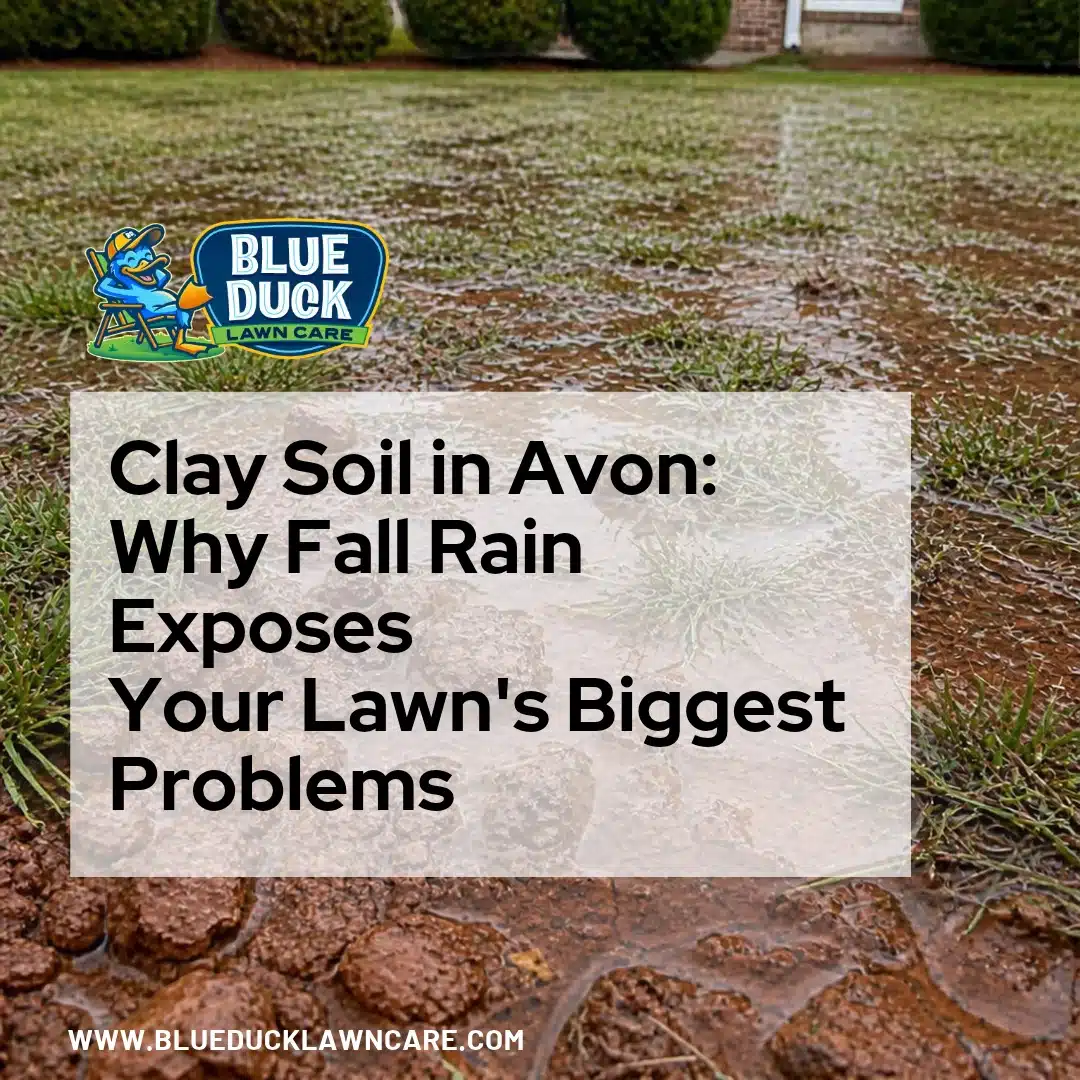
Clay soil lawn Avon Indiana homeowners deal with can become especially troublesome after heavy fall rain. Clay-rich soil holds moisture longer than sandy soil. When the ground becomes compacted, water moves even more slowly. The result can be standing water, muddy patches, and grass that struggles to grow.
At Blue Duck Lawn Care, we understand how frustrating it is to watch your yard turn soggy after every storm. Many lawns across Avon and the Indianapolis area experience soil challenges. The key is understanding what happens beneath the grass.
Why Clay Soil Lawn Avon Indiana Problems Get Worse in Fall
Clay particles are naturally small and tightly packed.
This allows clay-rich soil to hold moisture and nutrients. However, water often moves through it more slowly than through sandy soil.
Fall weather can make this difference more noticeable.
Cooler temperatures reduce evaporation. Shorter days provide less sunlight. Frequent rain can leave the soil wet for extended periods.
If your lawn already drains slowly, another storm may create standing water.
How Fall Rain Affects Clay Soil in Avon Lawns
Rainwater needs space to move through the soil.
Healthy soil contains pores that allow water and oxygen to reach grass roots. Compacted soil has fewer of these openings.
When rain falls faster than the ground can absorb it, water collects near the surface.
You may notice puddles along sidewalks or near patios. Low sections of the yard may stay muddy long after the rain stops.
These are signs that your lawn needs closer attention.
1. Soil Compaction Makes Drainage Worse
Compaction is one of the biggest challenges for clay-heavy lawns.
Regular foot traffic gradually presses soil particles closer together. Kids playing outside can contribute to the problem. Pets often create worn paths through the yard.
Mowing wet grass can also increase compaction.
As soil becomes denser, roots have less room to grow. Water and oxygen struggle to move through the ground.
Signs of a Compacted Clay Soil Lawn in Avon Indiana
Look for these warning signs:
Water pooling after moderate rainfall
Hard ground during dry weather
Thin grass along walking paths
Muddy sections that rarely dry
Water running across the surface
Bare spots near patios or play areas
One symptom does not automatically confirm compaction.
However, several signs appearing together may indicate a problem beneath the surface.
2. Poor Drainage Can Leave Grass Roots Saturated
Grass roots need both moisture and oxygen.
When soil remains saturated, oxygen becomes limited. Roots may struggle to function normally.
Over time, consistently wet conditions can weaken turf.
This can create yellowing grass, thinning areas, or patches that fail to recover.
Adding more fertilizer will not correct saturated soil.
The drainage problem needs attention first.
When Poor Lawn Drainage Needs More Than Aeration
Not every soggy lawn has a compaction problem.
Some yards contain low spots that naturally collect runoff. Others receive water from downspouts or nearby paved surfaces.
Improper grading can also direct water toward the wrong areas.
Core aeration may improve compacted soil. However, it cannot correct major grading or drainage problems.
Persistent standing water may require a professional drainage evaluation.
3. Clay Soil Can Make Lawn Growth Uneven
Have you noticed one section of your lawn growing well while another stays thin?
Soil conditions may be responsible.
Some areas may contain more compacted clay. Others may receive additional runoff or less sunlight.
These differences affect root development.
Grass growing in poorly drained soil may struggle even when nearby turf looks healthy.
Why Thin Grass Appears After Heavy Fall Rain
Excessive moisture can reduce oxygen around grass roots.
Compaction can also restrict root growth. Together, these conditions make it harder for turf to recover from stress.
Heavy foot traffic across wet ground may worsen the problem.
Avoid walking or mowing across saturated areas whenever possible.
Give the soil time to dry before resuming normal activity.
4. Fall Leaves Can Trap Additional Moisture
Autumn leaves are part of life in Avon neighborhoods.
However, thick leaf buildup can create problems for already damp lawns.
Wet leaves can form a dense layer over the grass. This blocks sunlight and limits airflow.
The turf underneath may remain wet longer.
Remove heavy leaf accumulation regularly.
Light amounts can often be mulched into smaller pieces when conditions allow.
5. Core Aeration Can Help Clay Soil Lawns
Core aeration is a practical way to relieve soil compaction.
The process removes small plugs of soil from the lawn. These openings improve air and water movement through the root zone.
Aeration can also support healthier root development.
Fall is often a suitable time for aerating cool-season lawns in Central Indiana.
However, timing matters.
When to Aerate a Clay Soil Lawn in Avon Indiana
Aerate when the soil is moist but not saturated.
Extremely wet soil can smear or become further compacted under equipment.
Dry, hardened ground can also make aeration less effective.
Early fall typically offers favorable conditions for cool-season turf recovery. Late-season timing should depend on weather and grass growth.
Professional lawn care can help determine whether aeration is appropriate.
How to Improve Clay Soil Lawn Conditions in Avon
Improving clay-heavy soil takes time.
Start by reducing unnecessary traffic on wet grass. Avoid mowing when the ground is saturated.
Check where rainwater collects after storms.
Keep downspouts from discharging excessive runoff into problem areas.
Maintain healthy grass through proper mowing, fertilization, and seasonal maintenance.
Core aeration may help when compaction is present.
For severe drainage issues, consider an assessment by a qualified drainage professional.
The goal is not to remove all moisture from the soil. It is to create conditions where grass roots receive enough water and oxygen.
What Avon Homeowners Should Do After Heavy Fall Rain
Walk around your property once the rain stops.
Notice which areas dry first. Identify sections that remain muddy.
Check whether water flows toward your home or collects near paved surfaces.
Avoid immediately adding fertilizer or grass seed to saturated areas.
First, determine why the soil stays wet.
Addressing the underlying problem can prevent repeated lawn damage.
Get Professional Help With Clay Soil Lawn Problems in Avon
Clay soil lawn Avon Indiana homeowners experience can make fall maintenance challenging. Heavy rain often exposes compaction, poor drainage, and weak turf that developed over several seasons.
The good news is that many soil-related lawn problems can improve with consistent care.
Core aeration can help relieve compaction. Proper mowing and watering can support stronger turf. Drainage improvements may be necessary when standing water persists.
At Blue Duck Lawn Care, we help homeowners throughout Avon, Indianapolis, and surrounding Central Indiana communities maintain healthier lawns.
Our team understands the challenges of clay-rich soil and changing seasonal conditions.
Contact Blue Duck Lawn Care today to learn how professional aeration and seasonal lawn care can help your Avon lawn recover and grow stronger.